2026-11-09 · Carlos Mendoza
How Winter Rainfall Affects Homes Near the Sacramento River
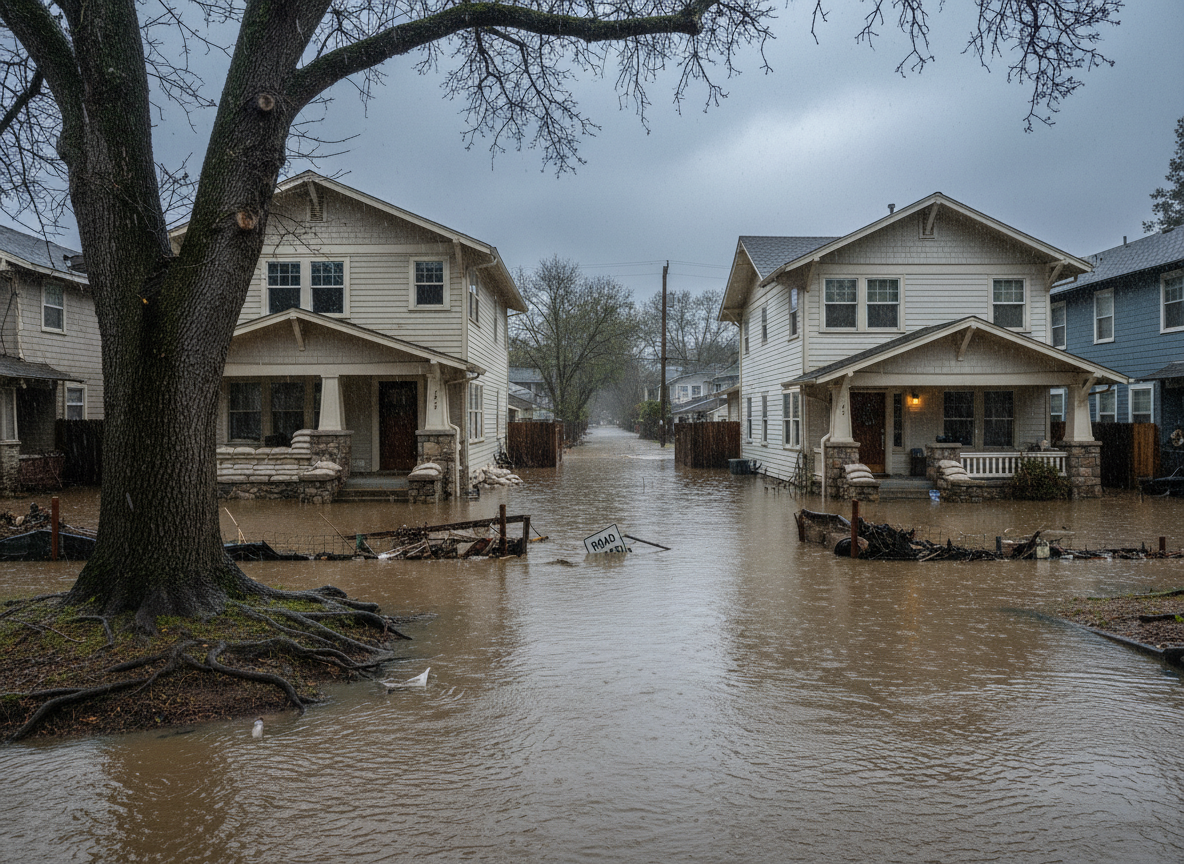
Winter rainfall along the Sacramento River saturates clay-heavy soils and elevates groundwater levels, allowing water to press against foundations and enter crawl spaces or basements in nearby neighborhoods. Homes in Land Park and East Sacramento often sit on older concrete slabs or raised foundations built before modern waterproofing standards, so even moderate storms can create persistent moisture issues that travel under flooring or behind walls.
Soil Saturation and Groundwater Rise
Cool wet winters deliver repeated rain events that the American River Parkway and surrounding levees cannot fully absorb, causing the water table to climb within a few feet of the surface near the river corridor. In South Sacramento and Oak Park, this saturation turns compacted yard soil into a sponge that directs water toward the lowest points of a structure. Older homes with cracked perimeter footings see moisture wick upward through stucco or brick, while newer slabs in North Sacramento can still experience edge seepage when the river stage remains elevated for days. The result is often hidden mold growth under carpets or in HVAC ducts before residents notice musty odors.
Foundation and Crawl Space Stress
Homes built before 1970 in Midtown and Downtown Sacramento frequently lack modern vapor barriers, so rising groundwater during winter storms forces moisture through expansion joints and utility penetrations. This constant dampness accelerates wood rot in floor joists and promotes efflorescence on concrete walls. Properties along the river in West Sacramento face additional hydrostatic pressure when storm drains back up, pushing water under slabs and into garages. Checking for hidden leaks in older Sacramento homes after storms becomes essential once visible puddles disappear but humidity stays elevated.
Drainage Limitations in Established Neighborhoods
Narrow streets and mature tree roots in Land Park and Oak Park restrict surface runoff, forcing water to pool against foundation walls during multi-day rain sequences. Many homes there rely on original clay or cast-iron pipes that crack with age and allow inflow during high river flows. In contrast, flatter lots in South Sacramento can develop reverse-grade yards after years of settling, directing roof runoff straight toward the house. These site-specific conditions turn routine winter precipitation into prolonged drying challenges that require targeted extraction rather than simple fan placement.
Long-Term Effects on Interior Finishes
Repeated winter wetting and drying cycles cause hardwood floors in East Sacramento Victorians to cup and separate, while drywall in finished basements absorbs salts that later bloom as white powder. In areas like Rancho Cordova and Citrus Heights that sit slightly higher but still drain toward the river, attic condensation increases when warm indoor air meets cold, damp roof decks. What shapes water damage restoration pricing in Sacramento often traces directly to how long moisture has remained trapped behind these finishes before discovery.
Homeowners who notice recurring damp spots near the Sacramento River corridor benefit from early inspection of grading, gutters, and sump systems before the next cool wet season arrives. Addressing small seepage points promptly limits the spread into living spaces and reduces the scope of later water damage restoration work. Linking these observations to seasonal patterns helps residents in West Sacramento and adjacent neighborhoods plan maintenance that matches actual local conditions rather than generic advice.