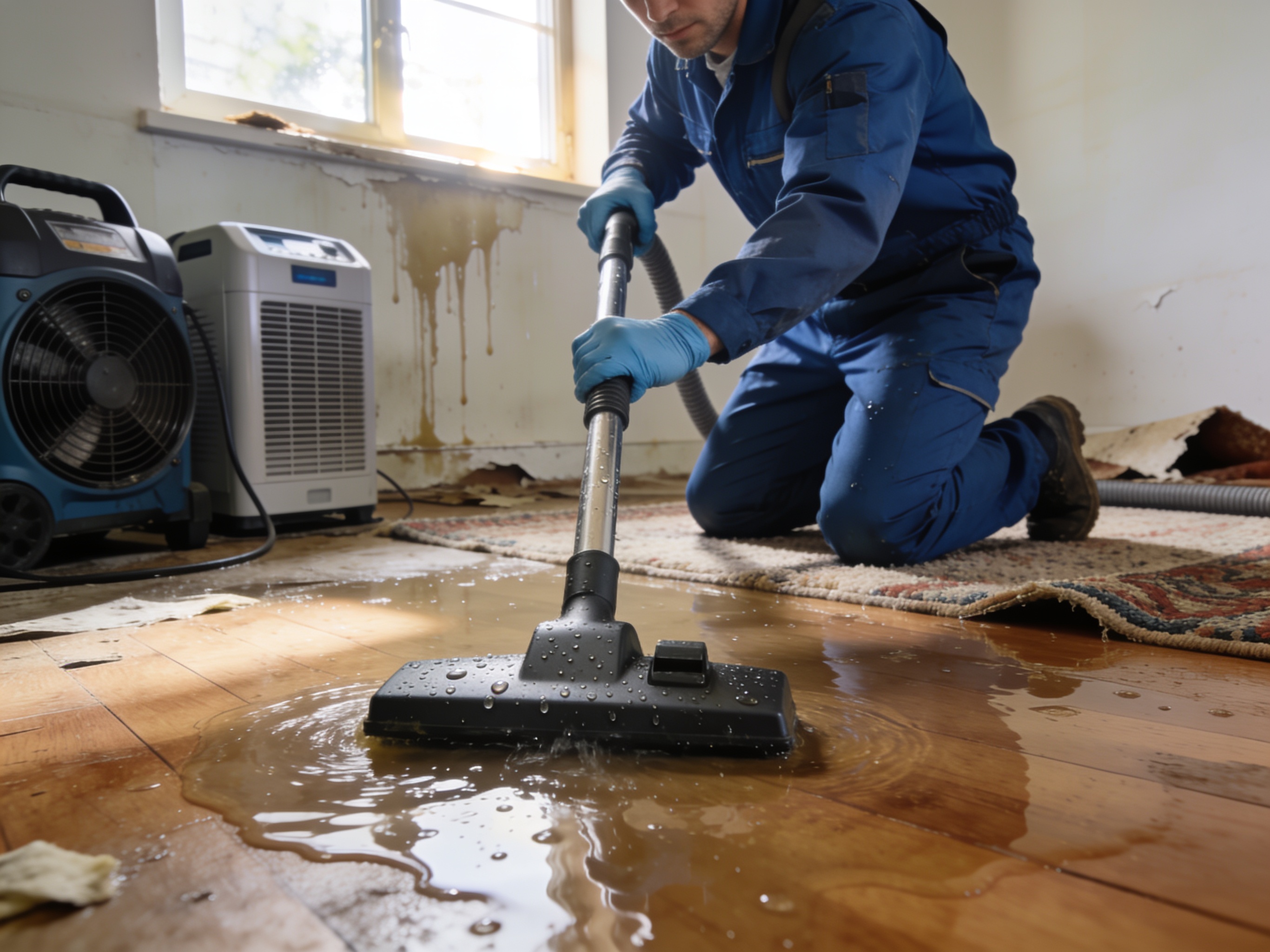
Sacramento's cool wet winters bring repeated rain events that saturate older housing stock in neighborhoods like Oak Park and North Sacramento. Many homes built before 1970 have crawl spaces and pier-and-beam foundations that trap moisture against wooden subfloors once the American River rises or storm drains back up. Technicians must pull carpet and baseboards quickly, then run commercial air movers and dehumidifiers for several days to prevent hidden mold growth between joists.
Hot dry summers create the opposite problem when irrigation lines or evaporative coolers fail in Midtown and East Sacramento. Water migrates under stucco and into wall cavities, often reaching the California State Capitol area where historic plaster and lath construction complicates removal. Extraction alone is never enough; crews must map moisture with thermal cameras and open walls at least 18 inches above the water line to meet local code requirements for drying verification.
South Sacramento and nearby Rancho Cordova sit on clay-heavy soils that hold water against slab foundations. When a water heater bursts or a sewer line backs up, the water does not drain away quickly. Restoration includes removing saturated insulation under the slab edge, treating affected concrete with antimicrobial solutions, and installing temporary negative-air machines to protect adjacent living spaces during the multi-day drying cycle.
West Sacramento and Citrus Heights properties near the American River Parkway face seasonal groundwater intrusion after prolonged winter storms. Crews frequently encounter delaminated hardwood floors and swollen particleboard cabinet bases. The work requires sequential removal of finishes, targeted drying of subfloors, and reinstallation only after moisture readings drop below 12 percent to avoid callback warping.
Technician insight
In Sacramento the thing that catches most people out with water damage restoration is how cool wet winters push groundwater against older pier-and-beam foundations in Oak Park and Land Park. Homeowners often stop once the carpet is pulled, but the real job is getting moisture out of the subfloor before the next storm hits.
Winter Rain Intrusion in North Sacramento
Heavy December rains flooded a 1960s crawl-space home near Northgate. Water had wicked into the hardwood subfloor and lower wall cavities. Crews extracted standing water, ran drying equipment for four days, removed and replaced swollen baseboards, then treated joists before reinstalling finishes.
Water Damage Restoration Services We Offer
✓Emergency Water Extraction
Rapid removal of standing water from basements, crawl spaces, and living areas in Downtown Sacramento and Land Park homes after storms or appliance failures.
✓Structural Drying and Dehumidification
Industrial air movers and desiccant dehumidifiers placed to pull hidden moisture from walls, subfloors, and insulation throughout Midtown and East Sacramento properties.
✓Mold Remediation After Water Damage
Containment, removal, and antimicrobial treatment of mold colonies that develop in older Oak Park and North Sacramento homes once winter moisture lingers.
✓Carpet and Pad Removal
Safe extraction and disposal of saturated carpet and padding in South Sacramento residences where clay soils keep water against slab edges.
✓Hardwood Floor Restoration
Drying, sanding, and refinishing of cupping or delaminated hardwood floors common in Rancho Cordova and Citrus Heights homes near the river parkway.
Water Damage Restoration Cost in Sacramento, CA
| Service | Typical Range | What Affects It |
|---|---|---|
| Category 1 Clean Water Extraction | $400–$900 | Depends on square footage and access in single-story homes |
| Category 2 Gray Water Job | $800–$1800 | Includes containment and disposal; higher in multi-level Midtown properties |
| Full Structural Drying Package | $1200–$2800 | Equipment rental and monitoring for 3–5 days typical in older Sacramento homes |
| Mold Remediation Add-On | $600–$1500 | Varies with containment size and material removal in crawl spaces |
Ranges are typical for Sacramento, CA and confirmed with an exact written quote before any work starts.
How it works
- 1
On-Site Assessment
Technician arrives within hours, maps moisture with meters and thermal imaging, and documents affected materials in the specific Sacramento neighborhood.
- 2
Water Removal
Pumps and extractors remove standing water from floors, walls, and crawl spaces before it migrates further into the structure.
- 3
Drying And Monitoring
Air movers, dehumidifiers, and heaters run continuously with daily moisture readings until levels return to normal for the local climate.
- 4
Sanitizing And Restoration
Antimicrobial treatment followed by selective demolition, then reconstruction of drywall, flooring, and finishes to match original construction.
Pricing
Pricing varies by water category, volume, and how many days of drying equipment are required.