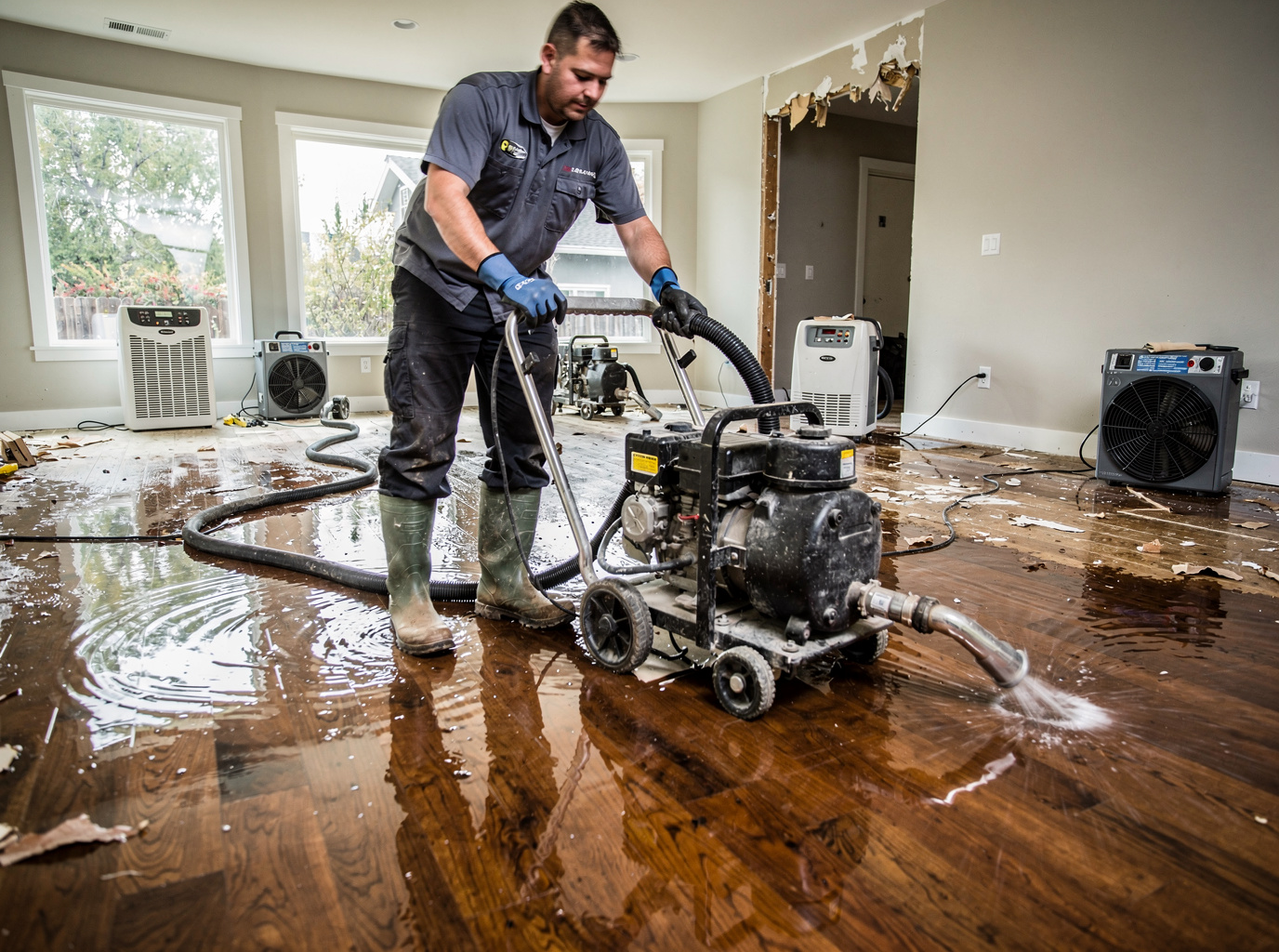
Sacramento's cool wet winters often send water into older plaster-and-lath homes in Land Park and Oak Park where original clay sewer lines crack and allow groundwater to seep upward. Hot dry summers then bake the surface while hidden moisture remains trapped behind baseboards and under hardwood floors installed over slab-on-grade foundations common in 1940s–1960s stock. Technicians must pull carpet pads, use moisture meters on subfloors, and run commercial air movers for days longer than newer builds require because Sacramento's clay soils hold water against foundations.
East Sacramento and Midtown properties near the American River Parkway face seasonal river-level spikes that push water into finished basements and crawl spaces. Crews extract standing water first, then focus on Category 3 gray water from appliance failures or Category 2 intrusion from roof leaks around Sutter's Fort area homes with flat tar-and-gravel roofs. Drying plans account for the fact that downtown high-rises and South Sacramento ranch houses share the same winter humidity spike but differ in wall cavity access.
Restoration after water events in Rancho Cordova and Citrus Heights often involves removing saturated insulation from crawl spaces that sit only inches above the high water table. Technicians document every step for insurance adjusters while avoiding over-drying that cracks original oak flooring found in many North Sacramento bungalows. Work stays within normal business hours at 3459 La Grande Blvd, Sacramento, CA 95823 with crews available Monday through Friday 8am–6pm and Saturday 9am–2pm.
Technician insight
In Sacramento the thing that catches most people out with Emergency Water Damage Restoration is how quickly winter rain soaks into the clay soil around 1950s slab homes in Land Park and Oak Park then wicks up into baseboards while the hot summer air outside makes the surface feel dry.
Midtown Bungalow After Pipe Burst
A kitchen supply line failed overnight in a 1948 Midtown home. Water spread under original hardwood into the dining room and adjacent plaster wall. Crews extracted water the same morning, mapped moisture behind baseboards, and ran drying equipment for four days until readings matched unaffected areas.
Emergency Water Damage Restoration Services We Offer
✓Burst Pipe Water Extraction
Locate and stop active leaks then remove standing water from kitchens and bathrooms in older Sacramento homes before mold sets in behind cabinets.
✓Storm and Flood Drying
Deploy extraction equipment and dehumidifiers after heavy winter rains affect properties near the American River Parkway and low-lying areas of South Sacramento.
✓Sewage Backup Cleanup
Handle contaminated water removal and disinfection in crawl spaces common under 1950s ranch houses in Oak Park and North Sacramento.
✓Appliance Leak Restoration
Address water from washing machines or water heaters that saturates subfloors in Midtown and East Sacramento multi-story homes.
✓Crawl Space Water Removal
Pump and dry low crawl spaces typical in Land Park and Rancho Cordova where seasonal groundwater rises against foundations.
Emergency Water Damage Restoration Cost in Sacramento, CA
| Service | Typical Range | What Affects It |
|---|---|---|
| Initial Assessment And Extraction | $250–$600 | Depends on volume of water and access in crawl spaces or multi-story homes. |
| Drying Equipment Rental Per Day | $150–$350 | Number of air movers and dehumidifiers needed for the square footage. |
| Category 3 Contaminated Water Job | $800–$2,200 | Higher due to biohazard protocols in sewage backups common after winter storms. |
| Final Moisture Verification | $100–$200 | Required documentation for insurance claims on East Sacramento or Midtown properties. |
Ranges are typical for Sacramento, CA and confirmed with an exact written quote before any work starts.
How it works
- 1
Arrival And Safety Assessment
Technicians arrive, shut off water sources, and check for electrical hazards in flooded rooms of Sacramento homes.
- 2
Water Extraction
Remove standing water with truck-mounted pumps and portable extractors from carpets, hardwood, and tile in affected neighborhoods.
- 3
Moisture Mapping And Drying
Use meters to locate hidden moisture in walls and floors then set up air movers and dehumidifiers for controlled drying.
- 4
Sanitizing And Monitoring
Apply antimicrobial treatments where needed and return daily to check moisture levels until readings return to normal.
- 5
Restoration Handover
Remove equipment and prepare surfaces for any needed repairs by local contractors.
Pricing
Pricing varies by water category, affected square footage, and drying time required in older Sacramento housing stock.